What Is the Difference Between NMC Battery Pack and LFP Battery Pack in Electric Vehicles?
Battery technology is one of the most important parts of electric vehicles. Among the most commonly used lithium-ion battery types in EVs are NMC batteries and LFP batteries. Both technologies have their own advantages and disadvantages, and understanding the differences can help buyers choose the right EV according to their needs.
NMC stands for Nickel Manganese Cobalt, while LFP stands for Lithium Iron Phosphate. These names represent the chemical composition used inside the battery cells. Although both are lithium-ion batteries, their performance characteristics are different.
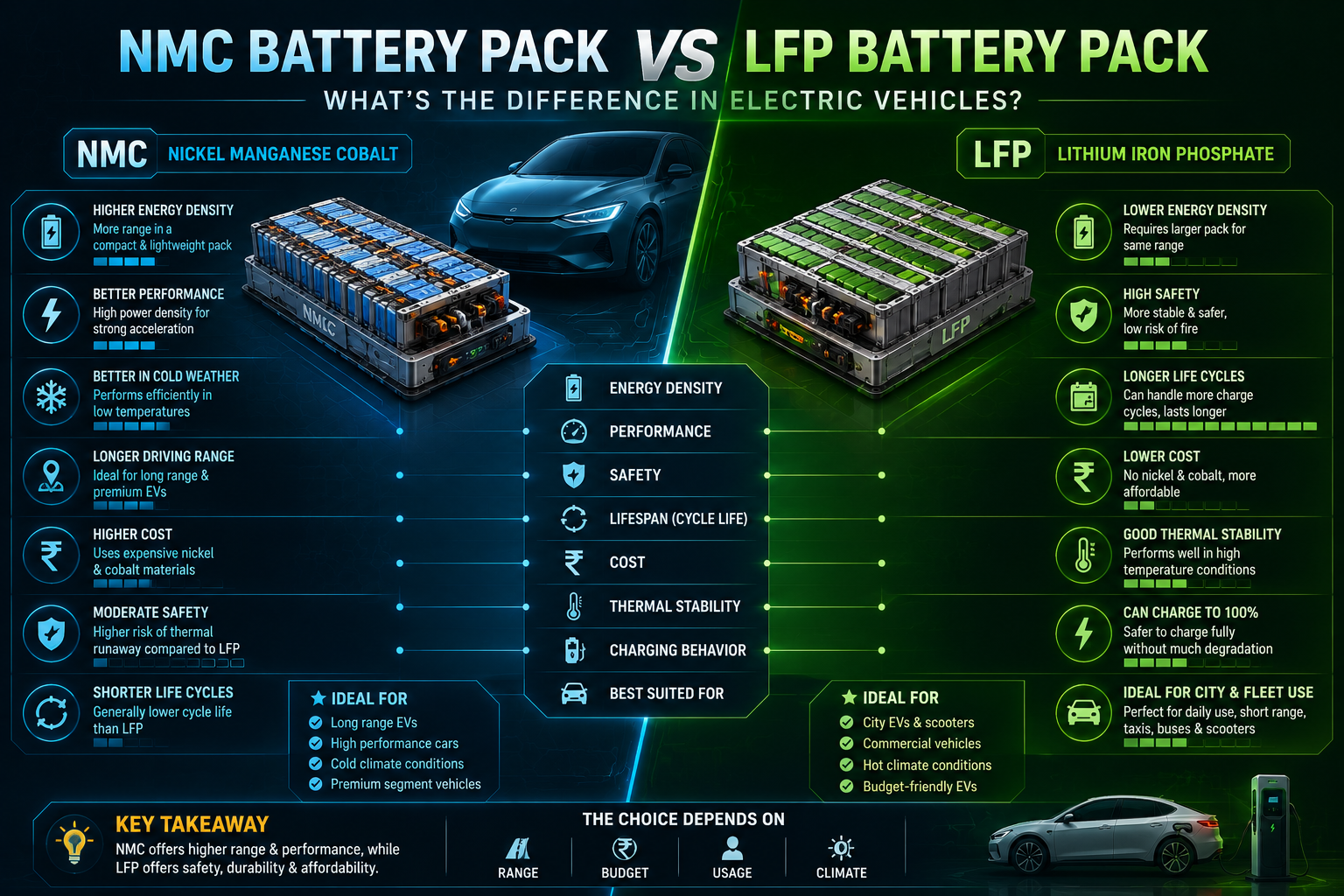
One of the biggest differences between NMC and LFP batteries is energy density. NMC batteries usually offer higher energy density compared to LFP batteries. This means NMC batteries can store more energy in a smaller and lighter package. Because of this advantage, many premium electric cars and performance EVs use NMC battery packs to achieve longer driving range.
On the other hand, LFP batteries generally have lower energy density. They may require larger battery packs to achieve the same range as NMC batteries. However, LFP technology has several other benefits that make it highly popular in many modern EVs.
Safety is another major difference. LFP batteries are considered safer and more thermally stable compared to NMC batteries. They are less likely to overheat and have lower chances of thermal runaway or fire risks. This makes LFP batteries highly suitable for hot climate conditions like India.
Battery lifespan is also important. LFP batteries generally offer longer charge cycle life compared to NMC batteries. An LFP battery can often handle more charging cycles before noticeable degradation occurs. This makes them suitable for commercial EVs, taxis, delivery vehicles, and fleet operations where daily charging is frequent.
NMC batteries usually provide better acceleration and higher performance because of their superior power density. This is why many high-performance electric vehicles use NMC chemistry. They also perform better in cold weather conditions compared to LFP batteries.
Cost is another major factor. LFP batteries are generally cheaper because they do not require expensive cobalt and nickel materials. This helps reduce EV manufacturing costs and makes electric vehicles more affordable for mass-market customers.
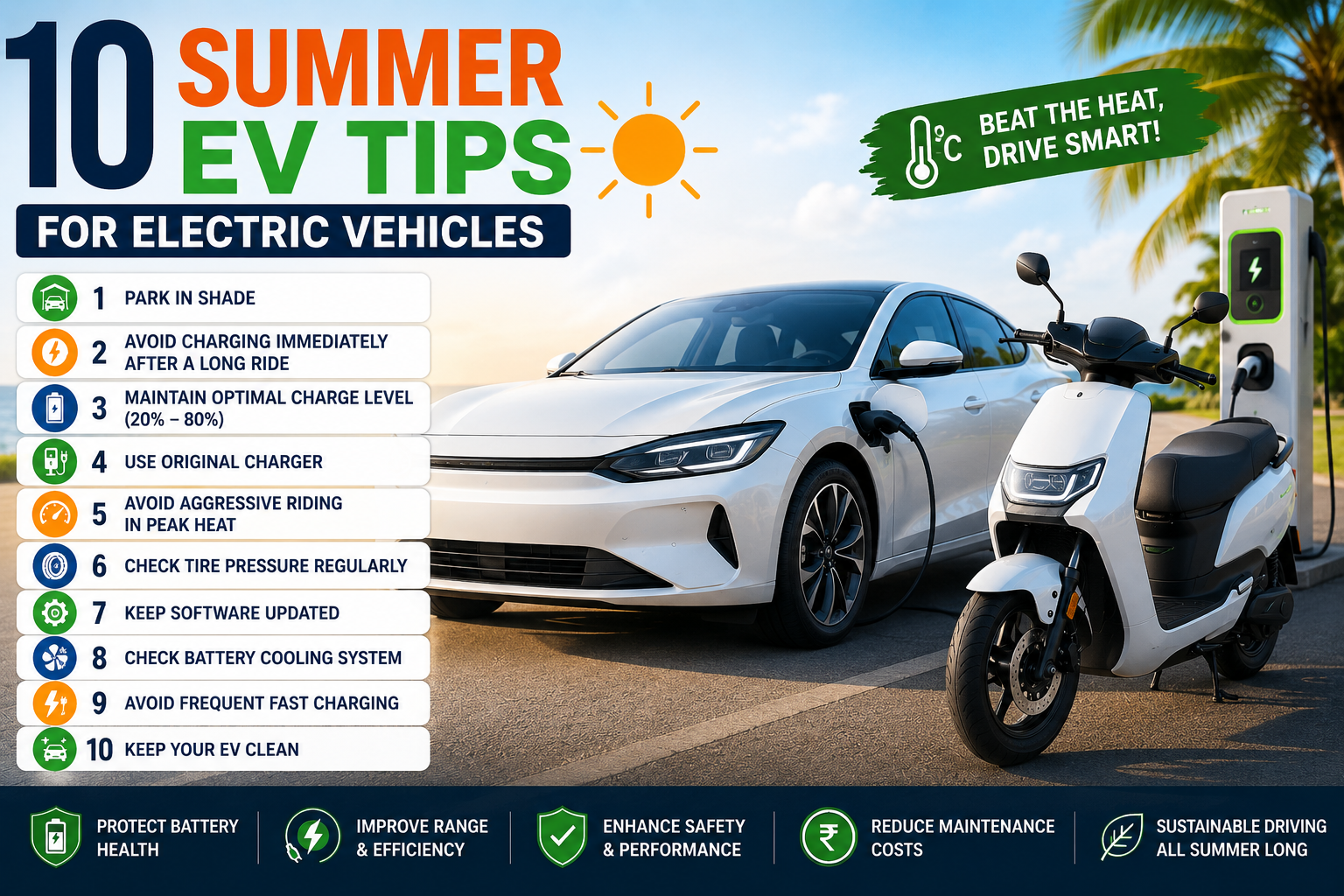
Charging behavior also differs between the two battery types. Many LFP batteries can safely charge to 100% regularly without major degradation concerns. In contrast, NMC batteries are often recommended to be charged between 20% and 80% for better long-term battery health.
Environmental impact is another consideration. LFP batteries are considered more environmentally friendly because they avoid heavy dependence on cobalt mining, which has both cost and ethical concerns.
Weight differences also exist. NMC batteries are lighter for the same energy capacity, which helps improve vehicle efficiency and handling. LFP batteries may be slightly heavier because of lower energy density.
Today, many EV manufacturers are strategically using both battery types depending on the vehicle category. Premium long-range EVs often use NMC batteries, while affordable city-focused EVs increasingly use LFP technology because of safety, durability, and lower cost advantages.
In India, where high temperatures are common and affordability is important, LFP batteries are gaining strong popularity in both electric scooters and electric cars. However, NMC batteries still remain important for performance-oriented and high-range vehicles.
In conclusion, NMC and LFP batteries each have unique strengths. NMC batteries provide higher range and performance, while LFP batteries offer better safety, durability, and affordability. Choosing between them depends on user priorities such as range requirements, budget, charging habits, climate conditions, and vehicle usage patterns.